
-
×
 The Sensual Alchemy Masterclass - For Men By Yuval Man
1 × $46,00
The Sensual Alchemy Masterclass - For Men By Yuval Man
1 × $46,00 -
×
 Ejaculation Guru and Female Pleasure Guru by Jack Grave
1 × $5,00
Ejaculation Guru and Female Pleasure Guru by Jack Grave
1 × $5,00 -
×
 Hypnotic Brain Bird by Dick Sutphen
1 × $5,00
Hypnotic Brain Bird by Dick Sutphen
1 × $5,00 -
×
 Weightless Wealth By Elisa Canali
1 × $31,00
Weightless Wealth By Elisa Canali
1 × $31,00 -
×
 Learn Mesmerism and Magnetism Hypnosis by ZenOsho Energy
1 × $54,00
Learn Mesmerism and Magnetism Hypnosis by ZenOsho Energy
1 × $54,00 -
×
 The CEO Masterclass Replay By Elisa Canali
1 × $15,00
The CEO Masterclass Replay By Elisa Canali
1 × $15,00 -
×
 Infield Mastery Program By Matt Artisan
1 × $69,00
Infield Mastery Program By Matt Artisan
1 × $69,00 -
×
 Sexual Trigger Program by Jon Sinn
1 × $5,00
Sexual Trigger Program by Jon Sinn
1 × $5,00 -
×
 Abundance And Money Workshop Replay By Samantha Chung & Gina Bourne
1 × $46,00
Abundance And Money Workshop Replay By Samantha Chung & Gina Bourne
1 × $46,00 -
×
 The Money Muse Experience By Elisa Canali
1 × $31,00
The Money Muse Experience By Elisa Canali
1 × $31,00 -
×
 Affiliate Marketing Business Blueprint By David Sharpe
1 × $31,00
Affiliate Marketing Business Blueprint By David Sharpe
1 × $31,00 -
×
 Training the Electric/Magnetic Lines of Force with Movement By Sixty Skills
1 × $15,00
Training the Electric/Magnetic Lines of Force with Movement By Sixty Skills
1 × $15,00 -
×
 A History of Eastern Europe By Vejas Gabriel Liulevicius
1 × $5,00
A History of Eastern Europe By Vejas Gabriel Liulevicius
1 × $5,00


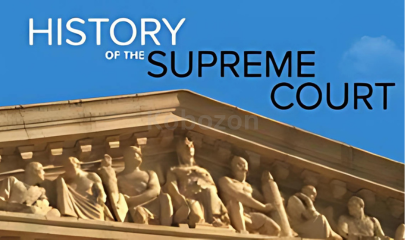
History of the Supreme Court By Peter Irons
$5,00
A People’s History of the Supreme Court: Unveiling Peter Irons’ Insightful Journey – Immediate Download!
Let’s embark on a captivating adventure to uncover remarkable insights that spark your curiosity and elevate your understanding

History of the Supreme Court By Peter Irons
Overview
A People’s History of the Supreme Court: Unveiling Peter Irons’ Insightful Journey
In the realm of American history, few institutions have stood as pivotal as the U.S. Supreme Court. It has shaped the fabric of society, addressing monumental issues that resonate with citizens from all walks of life. Peter Irons, in his remarkable work A People’s History of the Supreme Court, opens the door to this complex arena with a narrative that is as enlightening as it is engaging. By tracing the lineage of the Court from the foundational debates at the Constitutional Convention of 1787 to the pressing contemporary matters surrounding reproductive rights and LGBTQ+ equality, Irons presents a tapestry woven with human stories, legal battles, and the enduring quest for justice. This analysis seeks to delve into the heart of Irons’ work, exploring its themes, the ideologies it challenges, and the historical context it so richly provides.
The Evolution of Judicial Power
Irons begins his exploration at a pivotal crossroads in American history the Constitutional Convention of 1787. This event was not merely a gathering of delegates but a crucible where the future of judicial power was forged. The debates over the structure of the Supreme Court were laden with philosophical inquiries into the balance of power among the branches of government. At the heart of these discussions was the question: should the judiciary be a co-equal branch, or subordinate to the will of the legislature?
The subsequent establishment of the Supreme Court as articulated in Article III of the Constitution was a radical departure from existing frameworks. Irons emphasizes the transitions that followed, illustrating how the interpretation of judicial power has evolved substantially. Here are some pivotal moments outlined in his work:
| Year | Significant Case | Impact |
| 1803 | Marbury v. Madison | Established the principle of judicial review. |
| 1857 | Dred Scott v. Sandford | Denied citizenship to African American slaves. |
| 1954 | Brown v. Board of Education | Declared racial segregation in public schools unconstitutional. |
| 1973 | Roe v. Wade | Recognized women’s constitutional right to abortion. |
Through these cases, Irons illustrates a crucial theme: judicial interpretation is not static but evolves in response to societal shifts and conflicts. By focusing on landmark decisions, he encapsulates how the Court’s role has transformed, making it an agent of change or a bastion of conservative values, depending on the era.
The Human Stories Behind Landmark Cases
One of the most compelling aspects of Irons’ A People’s History of the Supreme Court is his emphasis on individual litigants, whose profound personal narratives convey the stakes involved in seemingly abstract legal battles. The accounts of figures such as Fred Korematsu and Homer Plessy serve as poignant reminders that behind each case lies a human experience deeply personal and often fraught with struggle.
Korematsu’s story during World War II highlights the clash between civil liberties and national security. His defiance against internment policies led him to the Supreme Court, which ultimately ruled against him. Yet this case became a cornerstone in discussions about civil rights, illustrating the lengths to which individuals would go to seek justice. Irons doesn’t shy away from the emotional dimensions of these legal fights, painting a vivid picture of the courage required to stand against overwhelming odds.
Similarly, the narrative surrounding Plessy’s challenge to racial segregation in the late 19th century exemplifies the broader fight against systemic injustice. When the Court upheld segregation in Plessy v. Ferguson under the “separate but equal” doctrine, it sanctioned a practice that would pervade American society for decades. Irons captures the despair and resilience of individuals who stood up against this injustice, reminding readers that the fight for civil rights has always been personal and often perilous.
The depth of these stories turns legal history into a compelling human saga, challenging readers to empathize with the litigants who fought not just for themselves but for generations to come. Each narrative serves as a microcosm of the larger societal struggles, underscoring the notion that the quest for justice is an ongoing battle, fraught with setbacks but also rich in triumphs.
An Ideological Perspective on Constitutional Interpretation
Throughout his work, Irons adopts a distinct ideological lens that emphasizes a living interpretation of the Constitution, opposing the rigid originalist views that dominate some contemporary legal discourse. He argues that as society evolves, so too should our understanding of constitutional principles. This perspective invites readers to consider the implications of a static versus a dynamic interpretation of law.
Irons critiques the notion that the Constitution should be adhered to strictly as it was understood in the 18th century. Instead, he advocates for an understanding that accounts for changes in societal values and norms. The historical context of each Supreme Court ruling plays a vital role in shaping its legacy and relevance. For instance, the contrast between the views of justices during the constitutional debates and contemporary justices illustrates a profound shift in ideological paradigms.
A list of pivotal amendments and societal changes highlights this evolving perspective:
| Amendment | Year Ratified | Key Issues Addressed |
| 13th | 1865 | Abolished slavery and involuntary servitude. |
| 14th | 1868 | Granted citizenship to all persons born or naturalized in the U.S. |
| 19th | 1920 | Granted women the right to vote. |
| 26th | 1971 | Lowered the voting age to 18. |
Irons contends that the Supreme Court must reflect the values and struggles of the time, playing an integral role in the nation’s moral compass. This perspective invites ongoing dialogue about justice, fairness, and the role of government a conversation that is as relevant today as it was at the time of the Court’s founding.
The Impact of the Supreme Court on American Society
The Supreme Court’s influence extends far beyond the courtroom; it permeates the very fabric of American life, affecting everything from education to personal freedoms. Irons effectively illustrates how the Court’s decisions have resulted in both progress and setbacks for various social movements. His narrative connects the dots between landmark cases and their broader societal impacts, providing a comprehensive view of how justice has evolved over time.
For example, in the landmark case Brown v. Board of Education, the Court’s decision not only dismantled institutionalized racism in public schools but also sparked the Civil Rights Movement. Irons highlights how these monumental shifts are often met with resistance, illustrating the ongoing struggle to achieve equality in the face of longstanding prejudice.
Conversely, decisions like Citizens United v. FEC, which allowed for increased political spending by corporations, have raised concerns about the implications for democratic processes and the power of money in politics. Irons candidly discusses these dilemmas, providing a balanced account of both the achievements and the missteps of the Court.
The societal ramifications of these decisions invite readers to reflect on their own beliefs about justice and equality. In a nation characterized by diverse opinions and ideologies, Irons acknowledges the contentious nature of these discussions, positioning the Supreme Court as a barometer of societal values.
The Intersection of Law and Social Movements
Irons’ work articulates a clear link between the U.S. Supreme Court and the social movements that have shaped American history. He demonstrates how the Court has often acted as a catalyst for reform, responding to the pressures exerted by activists and ordinary citizens. The interplay between judicial action and social advocacy is a recurring theme throughout the book.
For instance, the feminist movement’s impact on reproductive rights and the eventual Roe v. Wade decision underscores how activism can influence legal interpretations and judicial outcomes. Irons illustrates that the path to such landmark rulings has been paved with collective action and determination. This interplay between law and social change is essential for understanding the Court’s role as both a product of and a contributor to societal evolution.
Additionally, the LGBTQ+ rights movement’s legal battles, culminating in Obergefell v. Hodges, reflect a similar dynamic. Irons details how advocacy efforts led to a shifting societal consensus on marriage equality, resulting in a Supreme Court decision that enshrined these rights in the legal framework. The book reveals that the Court does not operate in a vacuum; it is inextricably linked to the pulse of the nation.
This realization prompts reflection on the relationship between citizens and the legal system. As Irons succinctly puts it, “The law is not just a set of rules; it is a living entity shaped by the will of the people.” This notion invites readers to engage actively with the legal system and to advocate for justice in their communities.
Conclusion
Peter Irons’ A People’s History of the Supreme Court stands as a vital contribution to the narrative of American legal history. By intertwining poignant personal stories with a thorough examination of critical legal changes, Irons engages readers in a complex dialogue about justice, civil rights, and the evolving interpretation of the Constitution. His ideological lens encourages a reflection on how historical context shapes legal precedents and societal values.
As we navigate contemporary issues that often feel fraught with division, Irons’ work serves as a reminder of the ongoing struggle for justice and equality. It challenges us to view the Supreme Court not just as an institution but as a living testament to the ideals that underpin American democracy. In a world where the quest for rights and recognition continues, A People’s History of the Supreme Court is not only an important historical account but also an inspiring call to action for advocates of civil rights.
Frequently Asked Questions:
Innovation in Business Models: We use a group purchase approach that enables users to split expenses and get discounted access to well-liked courses. Despite worries regarding distribution strategies from content creators, this strategy helps people with low incomes.
Legal Aspects to Take into Account: Our operations’ legality entails several intricate considerations. There are no explicit resale restrictions mentioned at the time of purchase, even though we do not have the course developers’ express consent to redistribute their content. This uncertainty gives us the chance to offer reasonably priced instructional materials.
Quality Control: We make certain that every course resource we buy is the exact same as what the authors themselves provide. It’s crucial to realize, nevertheless, that we are not authorized suppliers. Therefore, the following are not included in our offerings: – Live coaching sessions or calls with the course author.
– Entry to groups or portals that are only available to authors.
– Participation in closed forums.
– Straightforward email assistance from the writer or their group.
Our goal is to lower the barrier to education by providing these courses on our own, without the official channels’ premium services. We value your comprehension of our distinct methodology.
Be the first to review “History of the Supreme Court By Peter Irons”
You must be logged in to post a review.
Related products


$23,00


$5,00






$5,00



Science
$5,00

Reviews
There are no reviews yet.