


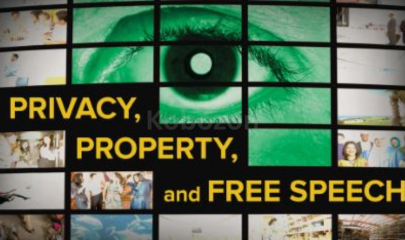
Privacy, Property, and Free Speech: Law and the Constitution By Jeffrey Rosen
$5,00
Privacy, Property, and Free Speech: Law and the Constitution in the 21st Century – Instant Download!
Let’s embark on a captivating adventure to uncover remarkable insights that spark your curiosity and elevate your understanding
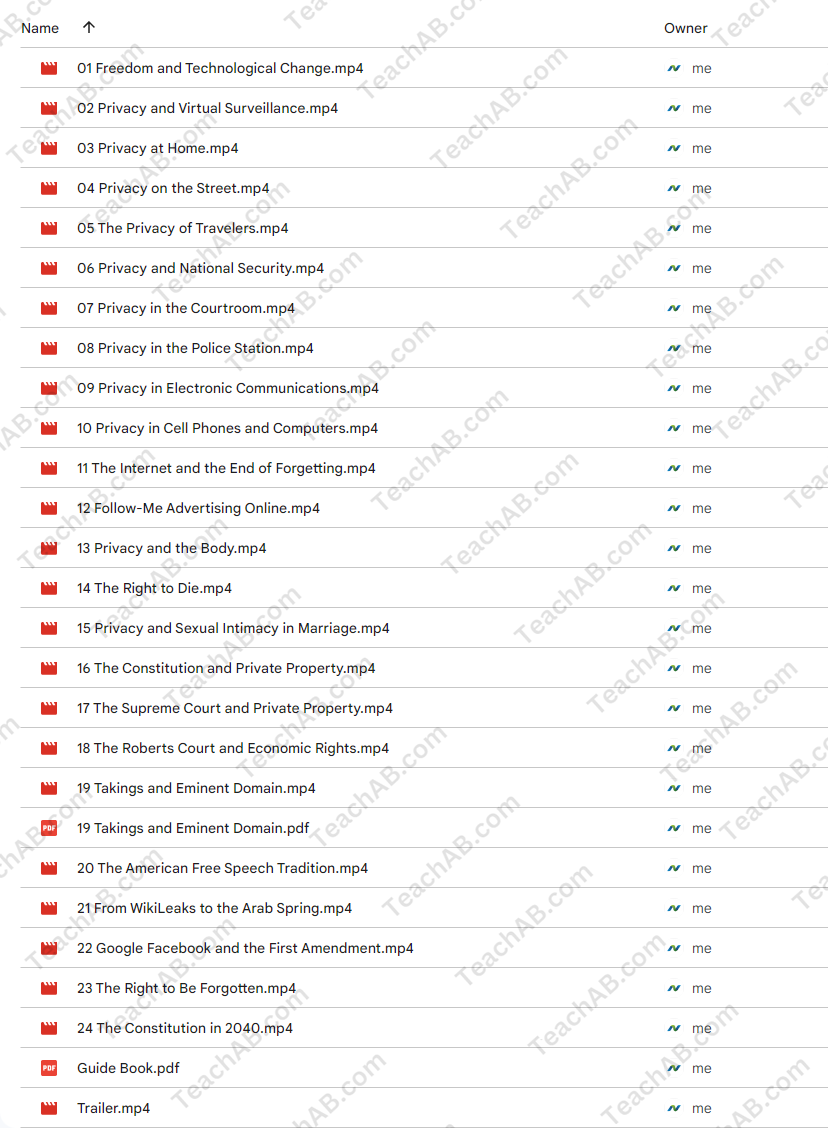
Privacy, Property, and Free Speech: Law and the Constitution By Jeffrey Rosen
Overview
Privacy, Property, and Free Speech: Law and the Constitution in the 21st Century
In an age where technology has become intertwined with our daily lives, the boundaries of privacy, property, and free speech have evolved dramatically. Jeffrey Rosen’s work, “Privacy, Property, and Free Speech: Law and the Constitution in the 21st Century,” serves as a beacon guiding us through this intricate legal landscape. The twenty-first century is marked by unprecedented challenges and opportunities, particularly in how we interpret and apply constitutional principles in the face of rapid technological advancements. The multifaceted discussions presented through Rosen’s twelve lectures not only dissect the evolution of these rights but also reflect on their significance in a digital era where personal identity and security are at stake. This exploration calls upon us to consider the delicate balance between individual liberties and societal responsibilities within the frameworks of modern legal interpretations.
H2: The Evolution of Privacy in the Digital Age
H3: Defining Privacy Then and Now
Historically, privacy was often perceived as the right to be left alone, a fundamental aspect of personal dignity and self-determination. However, as relationships and interactions increasingly migrate to digital domains, this notion has undergone a significant transformation. The advent of social media, online communications, and data-sharing platforms has blurred the lines of personal boundaries. Today, privacy is not merely about seclusion but encompasses how personal information is collected, stored, and used by various entities, often without individuals’ explicit consent.
To illustrate this shift, consider a simple analogy: privacy has evolved from a thick wall protecting a garden (symbolizing an individual’s personal life) into an intricate web of interlinked threads that can easily be tugged, revealing more than one might wish. In his lectures, Rosen critiques this metamorphosis, shedding light on contemporary privacy dilemmas and the inadequacies of existing legal frameworks to address them effectively.
H3: Legal Frameworks and Challenges
The legal landscape surrounding privacy has struggled to keep pace with technological advancements. While the Fourth Amendment of the U.S. Constitution provides a degree of protection against unreasonable searches and seizures, its application in the digital realm raises complex questions. For example, the emergence of smart devices and data mining practices forces us to reconsider what constitutes a reasonable expectation of privacy.
Recent landmark cases, such as Carpenter v. United States (2018), have prompted a reevaluation of these principles. In this case, the Supreme Court ruled that accessing historical cell phone location records constitutes a search under the Fourth Amendment, highlighting the importance of protecting personal data in the digital age. Through such rulings, the court attempts to adapt traditional legal concepts to modern contexts, though critics argue this is often an uphill battle.
| Case | Year | Significance |
| Carpenter v. United States | 2018 | Recognized cell phone data as subject to Fourth Amendment protections |
| Katz v. United States | 1967 | Established that a reasonable expectation of privacy is necessary for Fourth Amendment application |
H2: Property Rights in a Technological Context
H3: Redefining Ownership
As technology advances, the definition of property is being challenged, particularly concerning data ownership and digital content. No longer confined to physical assets, the concept of property now extends to intangible assets, raising critical questions: Who owns the data generated by users? Can software or digital platforms impose restrictions on how individuals use their purchased products?
The traditional understanding of property as a tangible asset is morphing into a more fluid concept that accommodates digital environments. Rosen highlights that beyond mere ownership, property rights now encapsulate control, access, and the potential for economic gain from one’s intellectual and digital creations.
H3: Balancing Rights and Regulations
The interplay between property rights and regulatory frameworks is equally complex. Laws like the Digital Millennium Copyright Act (DMCA) aim to protect intellectual property but often raise concerns about stifling innovation and free expression. The challenge lies in finding a balance where creators can receive fair compensation for their work while still allowing for a free exchange of ideas and information.
For instance, the challenges surrounding Net Neutrality directly connect to property rights do internet service providers have the right to control access to content? This debate echoes Rosen’s arguments on the necessity of adapting property laws to ensure equitable access while fostering an environment conducive to innovation.
| Regulation | Purpose | Impact |
| DMCA | Protects digital content creators | Can hinder user-generated content |
| GDPR (EU) | Protects personal data | Imposes strict guidelines on data usage |
H2: The Intricacies of Free Speech
H3: The Intersection of Speech and Technology
Free speech has always been a cornerstone of democracy, but its application in the digital realm has introduced fresh challenges. Rosen emphasizes that the platforms enabling global communication, such as social media, also create avenues for misinformation, hate speech, and harassment. This duality complicates the traditional understanding of free expression.
Through the lens of modern technology, free speech can be likened to a double-edged sword. While it empowers voices to be heard across the globe, it equally facilitates the dissemination of harmful content. The role of tech companies in moderating speech balancing the First Amendment rights of users with the need for safe online environments remains fiercely contested.
H3: Regulatory Responses and Censorship Concerns
As the custodians of digital speech, tech companies are in a unique position. Their moderation decisions can enhance living standards by eliminating harmful speech, but they also risk encroaching upon free expression. Rosen’s analysis sheds light on the potential repercussions of over-regulation wherein individuals may hesitate to express themselves due to fear of repercussions.
Several recent instances underscore this predicament. During pivotal protests and movements, such as the Black Lives Matter movement, platforms faced scrutiny over their content moderation practices. Critics argue that heavy-handed censorship can silence vital discussions. Thus, finding a balance that protects free expression while maintaining a respectful and safe discourse is an ongoing legal and societal challenge.
| Platform | Content Moderation Policy | Criticism |
| Community Standards | Accusations of bias in enforcement | |
| Rules against hateful conduct | Concerns about chilling effects on speech |
H2: Future Directions in Law and Society
H3: Adapting Constitutional Interpretations
As we continue to grapple with the implications of technology on privacy, property, and free speech, it becomes increasingly clear that constitutional interpretations must evolve. Rosen advocates for an ongoing dialogue about how the law can adapt to protect individual rights without compromising societal values. Engaging in interdisciplinary discourse involving law, technology, sociology, and ethics is essential for crafting effective policies that align with contemporary challenges.
H3: Promoting Civic Engagement and Awareness
Rosen highlights the necessity of promoting civic engagement and public awareness concerning these issues. As citizens navigate the complexities of the digital world, understanding their rights and the ramifications of corporate practices is crucial. Educational initiatives can empower individuals, leading to informed discussions about how to shape a more equitable digital future.
In this vein, multiple organizations, such as the Electronic Frontier Foundation (EFF), advocate for digital rights, raising awareness and pushing for policy changes that reflect the contemporary landscape. The onus is on both individuals and institutions to engage actively in the discourse regarding legal and social constructions surrounding these fundamental rights.
Conclusion
Jeffrey Rosen’s exploration of privacy, property, and free speech navigates the intricate currents of constitutional law in our rapidly evolving society. The challenges outlined in his discussions underline a pivotal truth: as we stride deeper into the digital age, we must redefine our understanding of these rights to accommodate new realities. By fostering dialogues between lawmakers, citizens, and tech companies, we can cultivate a legal framework that honors individual liberties while embracing the collective responsibility of ensuring a safe and equitable society. As we embark on this journey, let us carry with us the insights gleaned from the past, propelling us toward a future where our rights and freedoms are robustly protected amid the winds of change.
Frequently Asked Questions:
Innovation in Business Models: We use a group purchase approach that enables users to split expenses and get discounted access to well-liked courses. Despite worries regarding distribution strategies from content creators, this strategy helps people with low incomes.
Legal Aspects to Take into Account: Our operations’ legality entails several intricate considerations. There are no explicit resale restrictions mentioned at the time of purchase, even though we do not have the course developers’ express consent to redistribute their content. This uncertainty gives us the chance to offer reasonably priced instructional materials.
Quality Control: We make certain that every course resource we buy is the exact same as what the authors themselves provide. It’s crucial to realize, nevertheless, that we are not authorized suppliers. Therefore, the following are not included in our offerings: – Live coaching sessions or calls with the course author.
– Entry to groups or portals that are only available to authors.
– Participation in closed forums.
– Straightforward email assistance from the writer or their group.
Our goal is to lower the barrier to education by providing these courses on our own, without the official channels’ premium services. We value your comprehension of our distinct methodology.
Be the first to review “Privacy, Property, and Free Speech: Law and the Constitution By Jeffrey Rosen”
You must be logged in to post a review.
Related products
Science







Science




Reviews
There are no reviews yet.