-
×
 Advanced Overcoming Objections By Andy Elliott
1 × $69,00
Advanced Overcoming Objections By Andy Elliott
1 × $69,00 -
×
 9 Day Calendar Deep Dive 2023 By Jay Bailey - Sheridan Options Mentoring
1 × $31,00
9 Day Calendar Deep Dive 2023 By Jay Bailey - Sheridan Options Mentoring
1 × $31,00 -
×
 Training the Electric/Magnetic Lines of Force with Movement By Sixty Skills
1 × $15,00
Training the Electric/Magnetic Lines of Force with Movement By Sixty Skills
1 × $15,00 -
×
 2 Girls Teach Sex Bundle By Bobby Bradshaw, Shawna Lenee And Tori Black
1 × $5,00
2 Girls Teach Sex Bundle By Bobby Bradshaw, Shawna Lenee And Tori Black
1 × $5,00 -
×
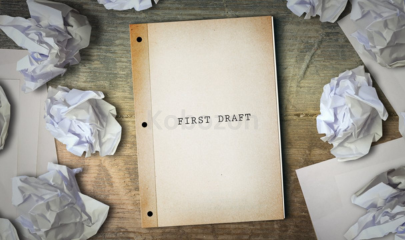 Screenwriting: The Art of the First Draft By Hal Ackerman
1 × $5,00
Screenwriting: The Art of the First Draft By Hal Ackerman
1 × $5,00 -
×
 Gnosticism: From Nag Hammadi to the Gospel of Judas By David Brakke
1 × $5,00
Gnosticism: From Nag Hammadi to the Gospel of Judas By David Brakke
1 × $5,00 -
×
 Excel And VBA 2024 By Breaking Into Wall Street
1 × $46,00
Excel And VBA 2024 By Breaking Into Wall Street
1 × $46,00 -
×
 Master Phone Training By Andy Elliott
1 × $194,00
Master Phone Training By Andy Elliott
1 × $194,00 -
×
 Fort Worth Playboy Evergreen VIP Bundle
1 × $69,00
Fort Worth Playboy Evergreen VIP Bundle
1 × $69,00 -
×
 Make Small Talk Sexy 2.0 by Bobby Rio
1 × $5,00
Make Small Talk Sexy 2.0 by Bobby Rio
1 × $5,00 -
×
 Books That Matter: The History of the Decline and Fall of the Roman Empire By Leo Damrosch
1 × $5,00
Books That Matter: The History of the Decline and Fall of the Roman Empire By Leo Damrosch
1 × $5,00 -
×
 The Quantum Angels Program by Burt Goldman
1 × $6,00
The Quantum Angels Program by Burt Goldman
1 × $6,00 -
×
 Compound Butterfly Blueprint (Elite Package) By Allison Ostrander - Simpler Trading
1 × $62,00
Compound Butterfly Blueprint (Elite Package) By Allison Ostrander - Simpler Trading
1 × $62,00 -
×
 Human Design Business Kickstart Bundle 2024 By Becca Francis
1 × $78,00
Human Design Business Kickstart Bundle 2024 By Becca Francis
1 × $78,00 -
×
 The Vert Code Elite By PJF Performance
1 × $23,00
The Vert Code Elite By PJF Performance
1 × $23,00 -
×
 Accents and Dialects Master Class By Eliza Jane Schneider
1 × $62,00
Accents and Dialects Master Class By Eliza Jane Schneider
1 × $62,00 -
×
 Norse Mythology By Jackson Crawford
1 × $5,00
Norse Mythology By Jackson Crawford
1 × $5,00 -
×
 The Federal Code Government Contracting By Jason White
1 × $23,00
The Federal Code Government Contracting By Jason White
1 × $23,00 -
×
 Daygame Mastery - Mastery Package By Justin Marc
1 × $179,00
Daygame Mastery - Mastery Package By Justin Marc
1 × $179,00 -
×
 Comprehensive Copywriting Academy by Nicki Krawczyk
1 × $21,00
Comprehensive Copywriting Academy by Nicki Krawczyk
1 × $21,00 -
×
 Clients On Automation System 10.0 by Ed Smith
1 × $33,00
Clients On Automation System 10.0 by Ed Smith
1 × $33,00 -
×
 Moon Manifestation System Coaching CERTIFICATION By Carl Stevens
1 × $171,00
Moon Manifestation System Coaching CERTIFICATION By Carl Stevens
1 × $171,00 -
×
 The Persian Empire By John Lee
1 × $5,00
The Persian Empire By John Lee
1 × $5,00 -
×
 Journey to Multidimensional Realms Through Bi-Location by Scott M. Taylor and EdDCharleene Nicely - The Shift Network
1 × $54,00
Journey to Multidimensional Realms Through Bi-Location by Scott M. Taylor and EdDCharleene Nicely - The Shift Network
1 × $54,00 -
×
 7 Days To A Kick Ass New You By Regan Hillyer
1 × $85,00
7 Days To A Kick Ass New You By Regan Hillyer
1 × $85,00 -
×
 Infield Mastery Program By Matt Artisan
1 × $69,00
Infield Mastery Program By Matt Artisan
1 × $69,00 -
×
 The Power of Boldness 2023 By Naveen Jain - MindValley
1 × $6,00
The Power of Boldness 2023 By Naveen Jain - MindValley
1 × $6,00 -
×
 Day Trading with Volume Profile and Orderflow By Price Action Volume Trader
1 × $46,00
Day Trading with Volume Profile and Orderflow By Price Action Volume Trader
1 × $46,00 -
×
 Turtle escapes by Leonardo "Tunico"
1 × $6,00
Turtle escapes by Leonardo "Tunico"
1 × $6,00 -
×
 Resheske Workshop Bundle by Lukas Resheske
1 × $24,00
Resheske Workshop Bundle by Lukas Resheske
1 × $24,00 -
×
 The 3rd volume of the hugely successful 2GTS Program! - Sexual Mastery Club by 2 Girls Teach Sex
1 × $5,00
The 3rd volume of the hugely successful 2GTS Program! - Sexual Mastery Club by 2 Girls Teach Sex
1 × $5,00 -
×
 Options Trading with Nick And Gareth By Nick Santiago And Gareth Soloway - InTheMoneyStocks
1 × $31,00
Options Trading with Nick And Gareth By Nick Santiago And Gareth Soloway - InTheMoneyStocks
1 × $31,00 -
×
 The Hurricane Cash Flow System by Liz Herrera
1 × $26,00
The Hurricane Cash Flow System by Liz Herrera
1 × $26,00 -
×
 Great Board Games of the Ancient World By Tristan Donovan
1 × $5,00
Great Board Games of the Ancient World By Tristan Donovan
1 × $5,00 -
×
 Online - The Demartini Values Training Program - USA 2020 (Videos Only) By Dr John Demartini
1 × $622,00
Online - The Demartini Values Training Program - USA 2020 (Videos Only) By Dr John Demartini
1 × $622,00 -
×
 Sexual Trigger Program by Jon Sinn
1 × $5,00
Sexual Trigger Program by Jon Sinn
1 × $5,00 -
×
 Applied Kinesiology Fundamentals Online Course By John Maguire
1 × $78,00
Applied Kinesiology Fundamentals Online Course By John Maguire
1 × $78,00 -
×
 Persuasion In Action Total Immersion Video Footage Collection By Ross Jeffries
1 × $50,00
Persuasion In Action Total Immersion Video Footage Collection By Ross Jeffries
1 × $50,00 -
×
 The ClickMinded Google Analytics 4 Course By Christopher Osborn
1 × $171,00
The ClickMinded Google Analytics 4 Course By Christopher Osborn
1 × $171,00 -
×
 Bulk Publishing System + AI-Integrated Spreadsheet by Arielle Phoenix
1 × $5,00
Bulk Publishing System + AI-Integrated Spreadsheet by Arielle Phoenix
1 × $5,00 -
×
 Limitless 2.0 (Week 1 – 5) by David Tian
1 × $5,00
Limitless 2.0 (Week 1 – 5) by David Tian
1 × $5,00 -
×
 Creating Helpful Content Workbook By Marie Haynes
1 × $31,00
Creating Helpful Content Workbook By Marie Haynes
1 × $31,00 -
×
 Classic Croissants, Modern Techniques By Colette Christian
1 × $5,00
Classic Croissants, Modern Techniques By Colette Christian
1 × $5,00 -
×
 How to Sing By Dawn Pierce
1 × $5,00
How to Sing By Dawn Pierce
1 × $5,00 -
×
 Twitter Badassery By Tim Denning
1 × $5,00
Twitter Badassery By Tim Denning
1 × $5,00 -
×
 The Programs Course By Larry Crane - Release Technique
1 × $46,00
The Programs Course By Larry Crane - Release Technique
1 × $46,00 -
×
 Sacred Success Coaching Method By Eden Carpenter
1 × $139,00
Sacred Success Coaching Method By Eden Carpenter
1 × $139,00 -
×
 Fundamentals of Financial Analysis By Leila Gharani
1 × $39,00
Fundamentals of Financial Analysis By Leila Gharani
1 × $39,00

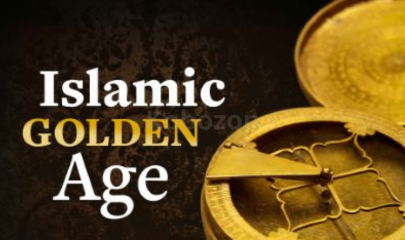
The History and Achievements of the Islamic Golden Age By Eamonn Gearon
$5,00
The history and achievements of the Islamic golden age – Instant Download!
Let’s embark on a captivating adventure to uncover remarkable insights that spark your curiosity and elevate your understanding
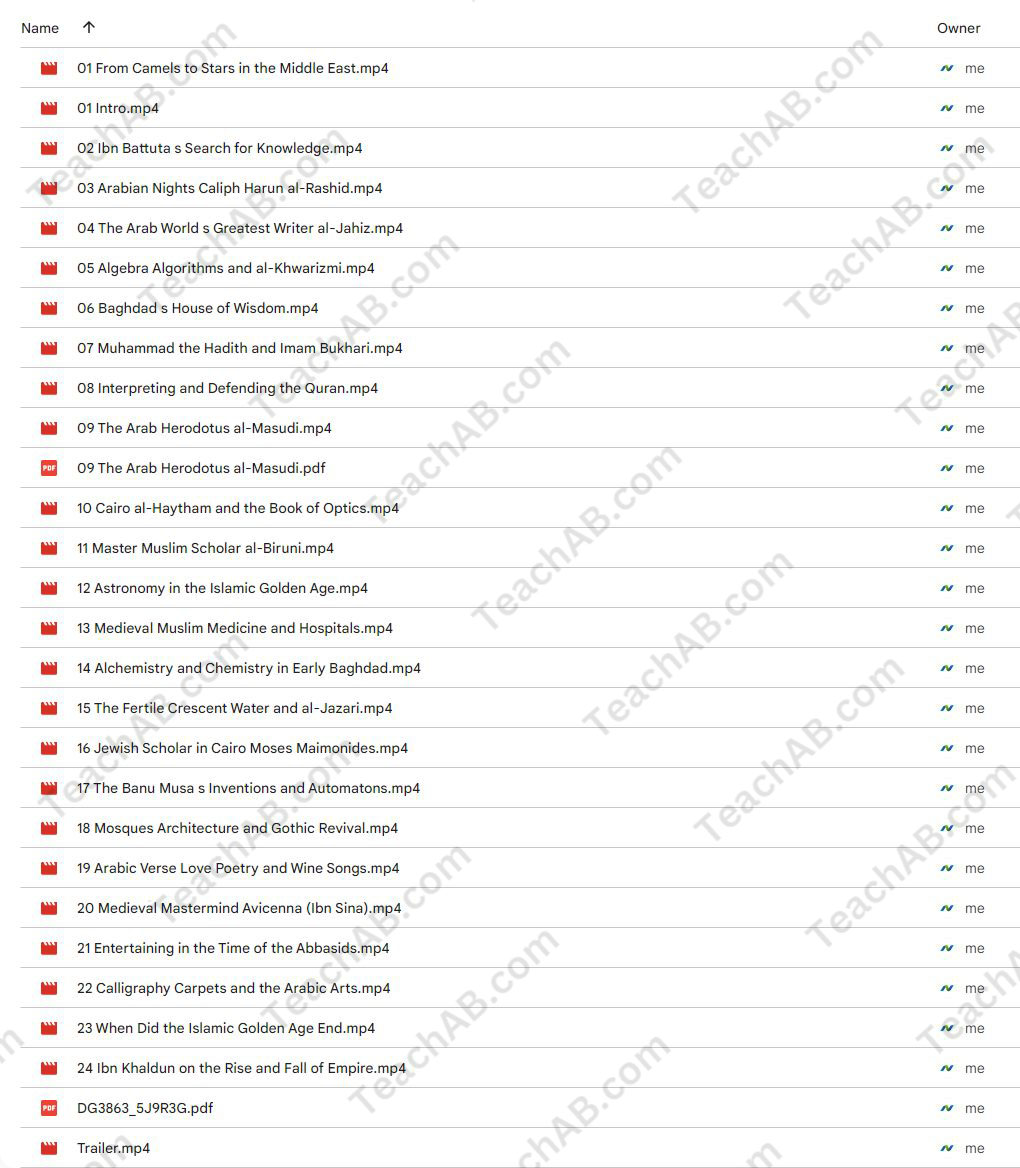
The History and Achievements of the Islamic Golden Age By Eamonn Gearon
Overview
The history and achievements of the Islamic golden age
The Islamic Golden Age, spanning from the 8th to the 13th centuries, marks a remarkable period where intellectual fervor led to groundbreaking achievements in various fields. Eamonn Gearon’s lectures, “The History and Achievements of the Islamic Golden Age,” delve into this transformative era, unraveling the intricate web of knowledge that emerged from the melting pot of cultures during the Abbasid Empire. This epoch was not just a monolithic Islamic phenomenon; it merged diverse contributions from Jews, Christians, and others, painting a rich tapestry of collaboration in thought and innovation. In this exploration, we’ll journey through the significant advancements in science, philosophy, mathematics, and the arts, witnessing how this epoch served as a bridge between ancient and modern civilizations.
Overview of the Islamic Golden Age
The Islamic Golden Age wasn’t merely a chapter in the grand narrative of human civilization, but rather a flourishing intellectual and cultural phenomenon that deserves detailed examination. Gearon emphasizes that this age can be characterized by an unprecedented level of intellectual exchange owing to the political, social, and economic conditions of the Abbasid Empire. Stretching across the Middle East, Northern Africa, and Central Asia, the empire served as a vibrant nexus for scholars from diverse backgrounds.
This period saw a fusion of ideas as scholars poured over ancient texts, leading to advancements that would lay the foundation for the Renaissance and modern thought. Whether it was the transformative leap in mathematics through the introduction of algebra, the refinement of medicinal practices, or the preservation and dissemination of classical literature, the Islamic Golden Age profoundly influenced intellectual development. Through this lens, Gearon weaves together narratives that appeal to people across various disciplines and backgrounds.
- Key Contributors: Scholars like Al-Khwarizmi, Avicenna, and Al-Farabi rose to prominence during this time.
- Significance: Their work encompassed not just Islamic thought but synthesized knowledge across cultures.
Yet, it is crucial to understand that this was more than just a world of scholars communicating in isolation; it was a vivid ecosystem buzzing with the exchange of ideas. The cities of Baghdad, Cordoba, and Cairo became proverbial beacons of learning where diverse peoples met and exchanged their knowledge.
Intellectual Advancements
Central to Gearon’s exploration are the remarkable intellectual advancements accomplished during the Islamic Golden Age. Fields such as mathematics, astronomy, medicine, and philosophy flourished, highlighting the pivotal role of scholars and their collaborative endeavors. At the crux of these advancements is the emergence of the scientific method, championed by figures like Ibn al-Haytham, who laid the foundations of optics. His methodological approach to experimentation and observation wasn’t just revolutionary for the time but resonates with principles that define contemporary scientific inquiry today.
Moreover, the introduction of algebra by Al-Khwarizmi is a cornerstone of modern mathematics. His seminal work, “Al-Kitab al-Mukhtasar fi Hisab al-Jabr wal-Muqabala“, translated into European languages, spurred mathematical interest that would echo throughout the ages. This profound shift in mathematical understanding allowed future scientists and mathematicians to build upon an established framework, highlighting the interconnectedness of knowledge across cultures.
- Key Contributions in Mathematics:
- Development of algebra.
- Improved methods for solving geometric and arithmetic problems.
- Introduction of the number zero, which was a revolutionary concept.
In medicine, figures like Avicenna made significant strides through works like “The Canon of Medicine,” which set high standards for medical education and practice. Remarkably, his texts remained pivotal references in European universities well into the 17th century. Such advancements are entwined with the notion of intellectual curiosity, nurturing a broader understanding not just of the individual sciences but also of their intricate connections, much like the myriad threads of a beautifully woven tapestry.
Cultural Interactions and Exchanges
As Gearon elucidates, the Islamic Golden Age was not solely about Persian, Arab, or Islamic contributions; it was a kaleidoscope of interactions among Jews, Christians, Zoroastrians, and other groups. This melting pot created a dynamic environment where ideas could flow unfettered like rivers converging to form a mighty ocean of knowledge. For instance, in places like Toledo, scholars of various faiths translated and debated ancient texts, enriching one another’s understanding.
The preservation of classical literature is a striking example of this intellectual convergence. Manuscripts from Ancient Greece and Rome that could have been lost to time were meticulously translated, commented upon, and expanded. Such preservation was not a mere act of documentation; it was an intellectual revival that invigorated the minds of the time. The spirit of inquiry that characterized this period can serve as a poignant reminder of our shared human quest for knowledge.
- Cultural Integration:
- Translation movements in cities like Baghdad and Cordoba.
- Collaborations among scholars of different faiths.
In art, this influence reveals itself in the intricate designs of calligraphy, architecture exemplified by the stunning Alhambra, and advances in music theory. The artistic expressions of the Islamic world were deeply intertwined with its scientific and philosophical explorations, creating a holistic culture that prized beauty alongside intellect. Gearon captures these intertwining narratives compellingly, showing how knowledge doesn’t exist in silos but flourishes through interactions.
Legacy and Influence
The legacy of the Islamic Golden Age cannot be overstated, as its influence is visible across various domains even today. The seeds of advancements planted during this era blossomed in Europe, contributing to the flourishing of the Renaissance a remarkable revival of interest in classical knowledge and culture. Gearon’s lectures articulate this timeline effectively, as they highlight how the conquests of knowledge during the Islamic Golden Age precipitated shifts in thought that resonate throughout centuries.
Not limited to the sciences, the impact of this era helped shape philosophical inquiries about existence, governance, and morality. Philosophers like Al-Ghazali raised questions about faith and reason, setting the stage for debates that would extend well into the Enlightenment and beyond. The interplay between religion and reason exemplifies a rich intellectual tradition that merits deep consideration in contemporary conversations about knowledge and belief.
- Key Philosophical Contributions:
- Al-Ghazali’s works questioning the interplay of faith and reason.
- Averroes’ commentaries on Aristotle, bridging Islamic and Western thought.
Additionally, the vibrant artistic heritage that emerged during this age has influenced various art forms worldwide. The intricate designs and themes found in Islamic art continue to inspire modern artists, reminding us that the essence of creativity transcends time and borders. Such legacies foster appreciation for cultural richness and encourage a collective understanding of our shared human heritage.
Critiques and Areas for Improvement
While Gearon’s lectures serve as a comprehensive overview, some critiques have emerged regarding the series. A number of reviewers observed that each lecture could stand independently, potentially leading to confusion regarding the chronological sequence of events. Without clear structural continuity, the overarching narrative may seem scattered, making it difficult for audiences to grasp the entire significance of this era cohesively.
Moreover, a recurring point of critique is the apparent focus on individual figures rather than a holistic exploration of broader theories and inventions. While showcasing notable scholars is essential, it risks overshadowing collective contributions from an array of individuals, particularly women whose roles in the sciences and arts have historically been underrepresented. A more inclusive approach could allow for a fuller appreciation of the diverse talents that propelled advancements during this golden age.
- Areas of Concern:
- Lack of historical narrative continuity.
- Insufficient focus on women’s contributions and broader theories.
By addressing these points, future iterations of the series could provide an even richer understanding of this pivotal period in history, allowing audiences to better appreciate the interconnectedness of cultural achievements.
Conclusion
Eamonn Gearon’s The History and Achievements of the Islamic Golden Age serves as a compelling introduction to a transformative epoch that significantly shaped the modern world. Through its meticulous examination of intellectual, cultural, and artistic advancements, the series underlines the importance of collaboration across cultures, emphasizing that knowledge flourishes most brightly when nourished by a diversity of perspectives. The rich tapestry of this age teaches us invaluable lessons that continue to resonate today, reminding us of the enduring legacy of shared human intellect and creativity. Ultimately, this exploration not only adds depth to our understanding of history but enriches our appreciation for the complex mosaic of our world.
Frequently Asked Questions:
Innovation in Business Models: We use a group purchase approach that enables users to split expenses and get discounted access to well-liked courses. Despite worries regarding distribution strategies from content creators, this strategy helps people with low incomes.
Legal Aspects to Take into Account: Our operations’ legality entails several intricate considerations. There are no explicit resale restrictions mentioned at the time of purchase, even though we do not have the course developers’ express consent to redistribute their content. This uncertainty gives us the chance to offer reasonably priced instructional materials.
Quality Control: We make certain that every course resource we buy is the exact same as what the authors themselves provide. It’s crucial to realize, nevertheless, that we are not authorized suppliers. Therefore, the following are not included in our offerings: – Live coaching sessions or calls with the course author.
– Entry to groups or portals that are only available to authors.
– Participation in closed forums.
– Straightforward email assistance from the writer or their group.
Our goal is to lower the barrier to education by providing these courses on our own, without the official channels’ premium services. We value your comprehension of our distinct methodology.
Be the first to review “The History and Achievements of the Islamic Golden Age By Eamonn Gearon”
You must be logged in to post a review.
Related products
Science
$5,00
$5,00
$5,00

$5,00

$23,00

$5,00
$5,00
$5,00

$5,00
Reviews
There are no reviews yet.